

Carbon monoxide is called “the silent killer” for a reason
March 3, 2026, about 1:30 a.m.
Emergency responders arrive at a northeast Calgary residence where they locate two people, an adult and a youth, in serious medical distress. One would die at the scene; the other shortly later in hospital.
In the home’s detached garage, where the two victims were originally located, two vehicles are parked, their engines turned off. However, there’s something in the air, and that something is as deadly as it is undetectable.
Readings taken reveal more than 300 parts per million of carbon monoxide. Exposure to that level over a period of time can be, and is all too often, fatal.
While what transpired that early morning in that garage was tragic, more tragic is, despite greatly heightened education and awareness, carbon monoxide poisoning kills some 300 Canadians annually.
Carbon monoxide is commonly referred to as “the silent killer” for a reason. It is odourless, tasteless and has no colour – factors that contribute to it being the leading cause of unintentional deaths in Canada.
Carbon monoxide is produced when hydrocarbon fuels, such as charcoal, wood, gasoline, natural gas or propane, are burned incompletely. The poor maintenance, installation and ventilation of fuel burning appliances and equipment, such as fireplaces, gas ovens and generators, can lead to a dangerous build-up of carbon monoxide in indoor spaces, including attached garages, where vehicles left running for a long period of time can seep the gas into the home.
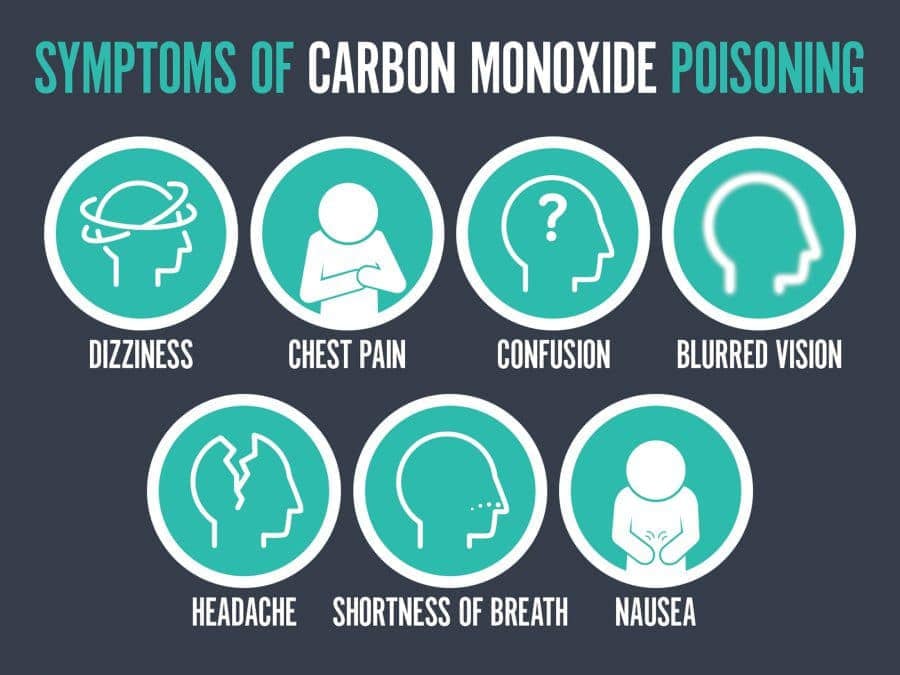
Early signs of mild to moderate carbon monoxide poisoning are similar to those of the flu, minus a fever. They include headache, dizziness, nausea, shortness of breath and fatigue.
Higher levels of carbon monoxide poisoning more often than not result in vomiting and loss of consciousness leading coma and death, which can occur after just a few minutes’ exposure to higher concentrations, or from a longer exposure to lower levels.
If you suspect a build-up of carbon monoxide in your home, workplace or other indoor space, get into fresh air immediately and call 9-1-1. Do not, for any reason, re-enter the space until it’s cleared by responders.
As frightening as the prospect of carbon monoxide poisoning is, there’s a simple and affordable way to keep you and yours safe. In Ontario, it’s also a legal requirement.
A change to the Ontario Fire Code effective with the arrival of the new year mandated carbon monoxide detection alarms be installed in all existing homes, condos and apartments with fuel-burning appliances, including furnaces, fireplaces and attached garages. Alarms must be installed on each storey of the dwelling and outside all sleeping areas. Detectors must be CSA certified, and can be of the hard-wired, battery-operated or plug-in variety.
Most all Canadian jurisdictions have similar or evolving laws requiring the installation of working carbon monoxide detectors.
In Ontario, failure to comply with the newly strengthened regulations can result in a fine upon conviction of up to $50,000 for individuals, $500,000 for corporations or businesses.
But failure to comply can result in something much worse than a hefty fine, as seen early on a March morning in Calgary.